Table of Contents
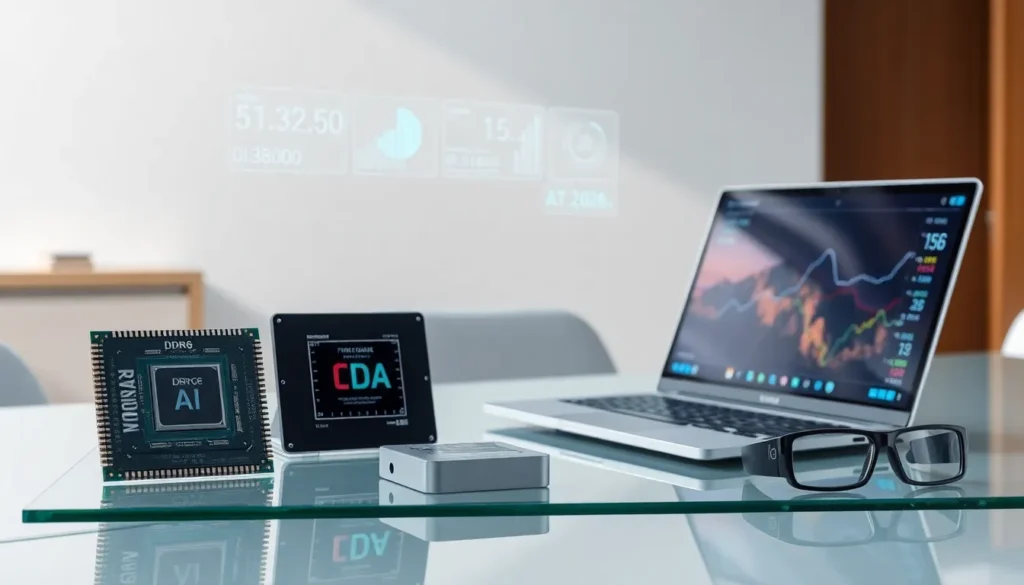
ToggleHardware trends 2026 will reshape how people work, play, and interact with technology. The coming year promises significant shifts in processing power, storage capabilities, and device design. From AI-driven chips to energy-efficient systems, manufacturers are preparing products that address both performance demands and environmental concerns.
This article breaks down the key hardware trends 2026 will bring to consumers and businesses alike. Each section covers a specific area of innovation, offering practical insights into what these changes mean for everyday users and tech professionals.
Key Takeaways
- Hardware trends 2026 will center on AI-optimized processors with dedicated NPUs capable of 40–100+ TOPS for on-device AI tasks.
- DDR6 RAM and PCIe 6.0 SSDs will deliver faster speeds and higher capacities, benefiting content creators and power users.
- Energy-efficient computing gains momentum as ARM-based chips and improved x86 architectures extend battery life and reduce cooling needs.
- Next-generation GPUs and display technologies like tandem OLED and mini-LED will enhance gaming, VR, and professional workflows.
- Foldable laptops, modular designs, and sustainable materials signal a shift toward more versatile and eco-conscious hardware.
- Smart glasses and wearable computing devices are becoming practical tools for everyday use with integrated AI assistants.
AI-Optimized Processors and Chips
AI workloads have become standard for consumer and enterprise devices. In response, chip manufacturers are building dedicated neural processing units (NPUs) directly into their silicon. Intel, AMD, and Qualcomm have all announced processors with enhanced AI acceleration for 2026 releases.
These AI-optimized chips handle tasks like real-time language translation, image recognition, and predictive text without relying on cloud servers. This shift reduces latency and improves privacy since data stays on the device. Apple’s M-series chips demonstrated this approach, and competitors are now following suit with their own implementations.
The hardware trends 2026 brings will see NPU performance measured in trillions of operations per second (TOPS). Entry-level laptops may offer 40+ TOPS, while high-end workstations could exceed 100 TOPS. This processing power enables local AI assistants, advanced photo editing, and real-time video enhancement without noticeable slowdown.
For businesses, AI-optimized processors mean faster data analysis and improved automation capabilities. Developers can build smarter applications that run efficiently on standard hardware rather than specialized servers.
Advances in Memory and Storage Technology
DDR6 RAM is expected to reach consumer markets in 2026. This next generation of memory doubles the bandwidth of DDR5 while improving power efficiency. Early specifications suggest speeds starting at 8,800 MT/s, with higher-end modules reaching 12,800 MT/s.
Storage technology is also advancing rapidly. PCIe 6.0 SSDs will begin appearing in high-performance systems, offering sequential read speeds above 25 GB/s. These drives benefit content creators working with 8K video and large datasets.
Hardware trends 2026 will also push 3D NAND technology further. Manufacturers like Samsung and Micron are stacking more layers to increase density without expanding physical footprint. Consumer SSDs with 8TB capacities at reasonable prices become more realistic with these improvements.
Another development worth watching is CXL (Compute Express Link) memory expansion. This technology allows systems to share memory pools across multiple devices, which changes how servers and workstations handle memory-intensive tasks. Data centers will adopt CXL first, but consumer applications may follow in subsequent years.
The Rise of Energy-Efficient Computing
Power consumption has become a critical factor in hardware design. ARM-based processors continue gaining ground in laptops and desktops because they deliver strong performance with lower energy draw. Microsoft’s partnership with Qualcomm for Windows on ARM devices reflects this industry direction.
The hardware trends 2026 introduces include more aggressive power management in x86 chips. AMD’s Zen 5 architecture and Intel’s upcoming designs focus on performance-per-watt improvements rather than raw speed alone. This approach extends battery life in portable devices and reduces cooling requirements in desktop systems.
Data centers are paying attention too. Server hardware with better energy efficiency reduces operating costs and environmental impact. Liquid cooling systems are becoming standard in high-density installations, replacing traditional air cooling that struggles with modern heat loads.
For consumers, energy-efficient hardware means quieter devices, longer battery life, and lower electricity bills. Fanless designs are expanding beyond ultrabooks into more powerful laptop categories. Gaming laptops in 2026 may finally achieve reasonable battery life during non-gaming tasks.
Next-Generation Graphics and Display Hardware
NVIDIA, AMD, and Intel are all preparing new GPU architectures for 2026. Ray tracing performance continues improving, making realistic lighting accessible in more games and applications. AI-assisted rendering techniques like DLSS and FSR reduce the computational load while maintaining image quality.
Display hardware trends 2026 will feature include higher refresh rates and improved HDR support. Mini-LED backlighting is becoming standard in premium monitors, while OLED panels drop in price for mainstream adoption. Tandem OLED technology, which stacks two OLED layers, promises brighter screens with longer lifespans.
Resolution increases continue as well. 4K remains the sweet spot for most users, but 8K displays are finding homes in professional editing suites and large-format installations. Gaming monitors at 1440p with 360Hz refresh rates offer competitive players smoother visuals.
Hardware trends 2026 also bring advancements in AR and VR displays. Higher pixel densities reduce the “screen door effect” that plagued earlier headsets. Passthrough cameras with better resolution and lower latency make mixed reality applications more practical for everyday use.
Emerging Form Factors and Device Innovation
Foldable devices are maturing beyond smartphones. Foldable laptops with flexible OLED screens offer new possibilities for portable computing. These devices can function as tablets, laptops, or external monitors depending on how users position them.
Hardware trends 2026 also include modular computing concepts. Framework’s approach to upgradeable laptops has influenced larger manufacturers to consider similar designs. Users can replace components like RAM, storage, and even CPUs without buying entirely new systems.
Wearable computing continues expanding. Smart glasses from Meta, Samsung, and others are gaining features that make them useful beyond novelty status. These devices integrate cameras, speakers, and AI assistants into lightweight frames suitable for daily wear.
The boundaries between device categories are blurring. Smartphones with desktop modes, tablets with laptop-class processors, and handheld gaming PCs all compete for user attention. This variety gives consumers more options but also complicates purchasing decisions.
Manufacturers are also experimenting with sustainable materials. Recycled plastics, bio-based components, and designs intended for easier recycling address environmental concerns. Some companies now offer take-back programs and publish detailed sustainability reports for their hardware.